

Mark Carney says the less powerful can choose honesty and independence but on AUKUS and the U.S. alliance, Anthony Albanese appears to be choosing weakness instead.Paul Begleywrites.
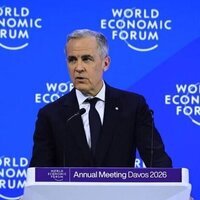
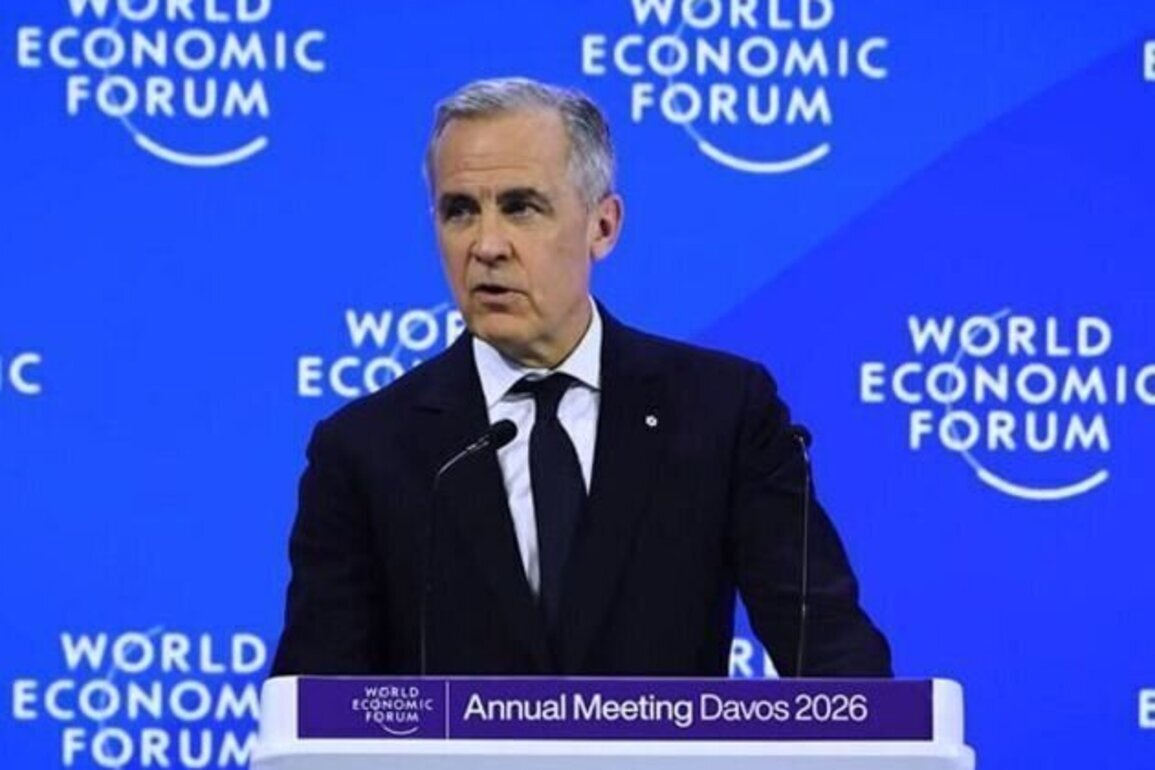
CANADIAN PRIME MINISTERMark Carneys Davosspeechto the World Economic Forum last month touched on the received wisdom ofThucydidesby observing the reality that the strong do what they can and the weak suffer what they must.
The Canadian PM also noted that both the strong and the weak tend to express a common belief in notions such as a rules-based international order, organised trade practices and respect for human rights.
Although it suits the strong to utter self-serving illusions, the weak mostly play along to avoid trouble.
To the dualistic notions of the strong and the weak, Carney added a third category, which he labelled the less powerful. Unlike the weak, he said that the group has options; that is, it has options unless it persists in repeating the prevailing fictions recited by the strong and the weak. In that eventuality, its only option is to count its members among the weak and suffer accordingly.
Unlike Australia, Canada continues to implement its long-term immigration planCanadas steady approach to immigration reform shows that long-term planning, not ad hoc reactions, delivers stability even in uncertain times.
With an educated population of around 41 million living largely in the urban cities of Ontario and Quebec, and a GDP of around AU$3.2 trillion, Carney counts Canada as one of the less powerful but not one of the weak. His proviso is that Canada and other less powerful nations fit the description of less powerful only if their leaders abandon the old comfortable assumptions that our geography and alliance memberships automatically confer prosperity and security.
With that in mind, he declares that Canada has signed new strategic partnerships with China and Qatar, free trade pacts with India, Thailand and the Philippines, become a core contributor to the security and defence of Ukraine, and stood with Denmark and Greenland on Arctic sovereignty. In addition, Canada is working with its NATO allies, including theNordic-Baltic Eight, to invest in radar, submarines, aircraft and boots on the ice.
Notably missing from this repositioning of alliances is any mention of the country to Canadas south, the United States of America. That is because Carney sees Canada no longer sharing its strategic interests or its values with the USA superpower and asserts that Canada has now ceased telling itself the lies that are at variance with the new reality.
As one of the less powerful, Carney has declared that being so is not the same as being weak or powerless:
In choosing AUKUS,Albanese chooses to remain powerless
With an educated population of around 27 million living largely in its urban coastal cities, and a GDP of around $1.9 trillion, by Carneys estimation, Australia could be counted as potentially one of the less powerful unless it were to persist in being dishonest with itself, in which case it would choose to be counted among the weak.
When theAlbaneseCabinet met after Labors resounding victory in the Election of May 2025, the Prime Ministerreminded his colleaguesthat they won because they offered the electorate cost-of-living relief, reliable health services, an equitable education system, improved housing supply, a robust response to climate change and a strategy to fight inflation.
To that questionable list of achieved aspirations, Albanese added discipline, which may have been the attribute closest to the truth. His first-term cabinet exercised the discipline needed to avoid speaking openly aboutAUKUS, the $368 billion sinkhole that is jeopardising the achievements he claims for his administration.
It is increasingly apparent that AUKUS now looks like a booby trap set by his predecessor,Scott Morrison. Founded on an open-cheque promise of nuclear-powered submarines to be delivered to Australia sometime in the 2030s, 2040s or never, Albaneses adoption of the policy has become a burden so great that it jeopardises any chance of a progressive Labor agenda being delivered.
AUKUS and the submarine illusion: Australias $368 billion surrenderAs Washington debates whether it can spare the submarines, Canberra continues to pay for vessels it may never fully control.
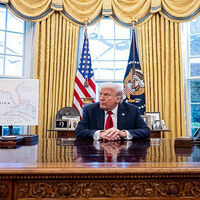
Albanese had an opportunity to get out from under AUKUS whenJoe Bidenwas in the Oval Office, but he let it roll over and is now trapped with a defence posture skewed to the interests of America First at a time when a wildly capricious PresidentTrumpis our forever alliance partner.
The time has also come to pass when Trump is predictably revealing that he doesnt really care for allies unless they prioritise his whims over anything that might resemble the allys national interest or sovereignty.
In the absence of a credible narrative by Albanese that explains AUKUS to the Australian public, his Deputy,Richard Marles, is happily taking on the role of courier when it comes to delivering regular $800 million AUKUS down-payments to his American equivalent, the U.S. Secretary of War,Pete Hegseth.
The payments are made on the wishful assumption that we might get something for our money apart from an occasional invitation to dinner on the White House lawn, asPaul Keating put it, so that our leaders can mix with fellow supplicants and sycophants, all equally desperate not to displease the host.
Against that backdrop, Marles has spruiked the merits of Australia signing up to the U.S. PresidentsBoard of Peace, an Orwellian group of national leadersdescribed by Jeremy Corbyn and othersas a gang of thieves.
Albanese is typically saying he is giving consideration to Trumps invitation, with Marles reminding him of shares values as though the U.S. under Trump bears any resemblance to the America that Australians once admired and with which we are now notionally sharing values.
To Trumps blatant murder ofVenezuelan fishermenandkidnappingof its president, Australia remains mute. Nor do our leaders give any comfort to Denmark or Greenland that they might have support from Down Under. Although Foreign MinisterPenny Wonghas ceased citing platitudes about a rules-based international order and no longer claims that Israel has a right to defend itself in the territories it illegally occupies, she falls into line with her fellow cabinet members in acknowledging the solemn nature of the visit to Australia of the Israeli President,Isaac Herzog.
The Prime Minister has made the audacious claim that the Herzog visit will contribute to the interests of unity when it is plainly causing rancour and division. Mr Herzog has been found by the United NationsIndependent Commission of Inquiry on the Occupied Palestinian Territoryto be responsible for Incitement to Genocide, an offence categorised as an Atrocity Crime within a rogue state.
Welcoming a war criminal: Herzog signals death of social cohesionAs protests erupt nationwide against the visit of Israeli President Isaac Herzog, Australians are raising their voices against a war criminal welcomed by a government determined to suppress dissent in the name of social cohesion.
Under the leadership of PM Albanese and Deputy PM Marles, Australias unfailing refusal to denounce the indefensible U.S.-Israeli position on the collective slaughter of Palestinian citizens is a failing that amounts to a perverse attachment to a set of international rules and values that no longer exist. The state visit was not forced upon Albanese; he chose to invite Herzog.
If the power of the less powerful starts with honesty, Australia is choosing to recite fictions that are old and dead. Among the deceptions that our political leaders are telling themselves on our behalf is thedeceitof No one held back, no one left behind.
That phrasing is indelibly imprinted in the public mind as an image of the personal profile that Albanese promoted of himself as a poor boy raised by a single mother, Maryanne, in public housing. That poor boy now presides over a government that gives away $368 billion for an empty promise, while unemployed Australians onJobSeekerare being told to pay for food and housing on less than $800 a week.
AUKUS now enables that one-time poor boy to accept invitations for dinner on the White House lawn, so he is plainly no longer being left behind. All this is happening at a time when AustraliasReserve Bank Boardwants to see increasing numbers of unemployed Australians before it will lower interest rates.
And of the 430,000 victims ofRobodebtwho have not recovered from the trauma and financial loss of opportunity caused by the extended life of that colossal failure of public administration, they are seeing in real time that Albanese has designed, reportedlyagainst the adviceof his then Attorney General, an anti-corruption body which ensures Robodebt victims will get no closure if it means exposing the Prime Ministers political opponents in high office to public recognition and judgement in the courts.
Dishonesty prevails on many fronts and ensures we are counted among the weak. Is that the price a poor boy has chosen to pay for catching up?
Paul Begleyhas worked for many years in public affairs roles, until recently as General Manager of Government and Media Relations with the Australian HR Institute. You can follow Paul@yelgeb.
Related Articles
- AUKUS and the submarine illusion: Australias $368 billion surrender
- When America raises the bill, Australia pays the price
- Invisible no more: How drone warfare exposes AUKUS strategic blind spot
- We should never have agreed to AUKUS
- Australias top-secret AUKUS cloud may hand our data over to the U.S.